Bulk Gravel and Stone Delivery in Grant County, WA
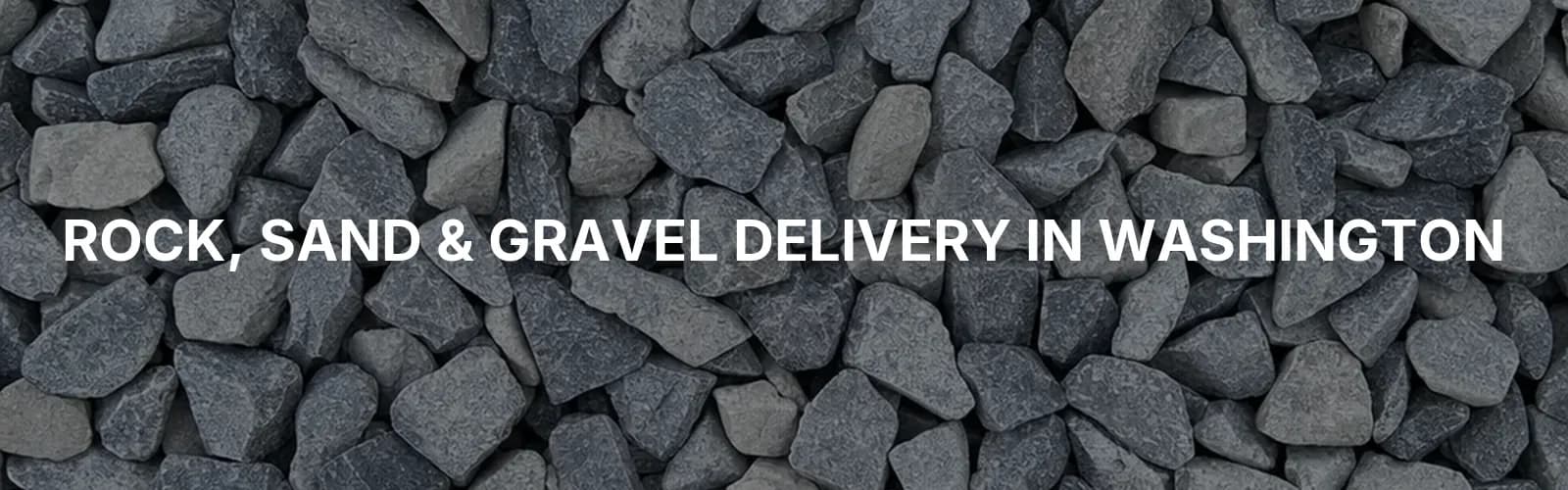
Washington Rock Supply brings gravel, stone and aggregate delivery in Grant County, WA to driveways, pads and building sites from Moses Lake to Quincy. If you are ordering surfacing rock here, you are ordering 5/8 minus.
It is crushed rock with the fines left in, so it packs hard and sheds water instead of soaking it up.
Grant County sits in the Columbia Basin, where windblown loess covers Columbia River basalt and the Ice Age floods left sand and gravel bars behind in the coulees.
Materials Delivered in Grant County
Start with 5/8 Minus, which Washington contractors also call crushed surfacing top course or CSTC. It is the state default surfacing course for driveways, parking pads, and shed and shop slabs.
Base course takes a 1 1/4 inch top size and top course takes a 5/8 inch top size.
For the structural course under a drive, parking area or slab, order 1 1/4 Minus, also called crushed surfacing base course or CSBC. It carries load on soft wet ground.
Add Washed Sand for concrete mixes and pipe bedding, or Washington River Rock for dry creek beds and splash pads. Both are washed, which matters on a site working through the wet season.
Delivery Across Grant County
Order online and choose your quantity by the ton or by the yard. Each product page has a calculator, and you pick your delivery date at checkout.
A dump truck then tips the load on site.
Deliveries run across the county, including Moses Lake, Ephrata, Quincy, Mattawa, Warden, Royal City, Soap Lake, Grand Coulee, Electric City, Coulee City, Beverly, Hartline and Marlin.
Sizing the load is the part worth getting right before you order. Bulk material arrives in one pile, so think about where you want that pile to sit on the property.
Ground Conditions Across Grant County
Across the Columbia Basin, Yakima Valley and the channeled scablands, windblown loess sits over Columbia River basalt. Where the Ice Age floods ran, they stripped the loess off and left the basalt bare.
That silt sheds water rather than absorbing it, so a thin base course over loess softens and ruts instead of holding. The fix is a base course sized for the load and a washed drainage layer where water collects.
Across this part of the state, wind off bare dry silt moves soil, and short violent runoff cuts rills and gullies. Riprap and large round rock armour banks, swale edges and culvert outfalls against that.
Winters here are cold and dry, and the ground freezes properly, unlike west of the Cascades. Frost depth in Grant County is 18 inches, and the county or city building department sets the figure.
The wet weather season for erosion control in eastern Washington runs October 1 through June 30. Once snow falls or the ground freezes, placing and compacting base material stops being practical.
Choosing the Right Material
Douglas County and Benton County share Grant County's ground: windblown loess over Columbia River basalt, with flood gravel in the coulees and along the rivers. The base and drainage choice is the same there.
Okanogan County spans more than one ground region, taking in the Okanogan Highlands and the northeast corner along with the Cascade Range and the east-slope valleys. Rockier, higher ground changes what a base course has to do.
Match the material to the job: 5/8 minus for a surfacing course, 1 1/4 minus beneath it, and drain rock or 3/4 clean where water needs to move rather than sit.
Order Bulk Gravel and Stone for Grant County
Match the material to the job, then size the load by the ton or the yard. Each product page carries a calculator to help you set the quantity, and you choose your delivery date at checkout.
Once your order is placed, a dump truck tips the load on site. Shop 5/8 minus, 1 1/4 minus, drain rock, topsoil and the rest of the range, and place your order online today.