Order 5/8 Minus and Crushed Stone in Franklin County, WA
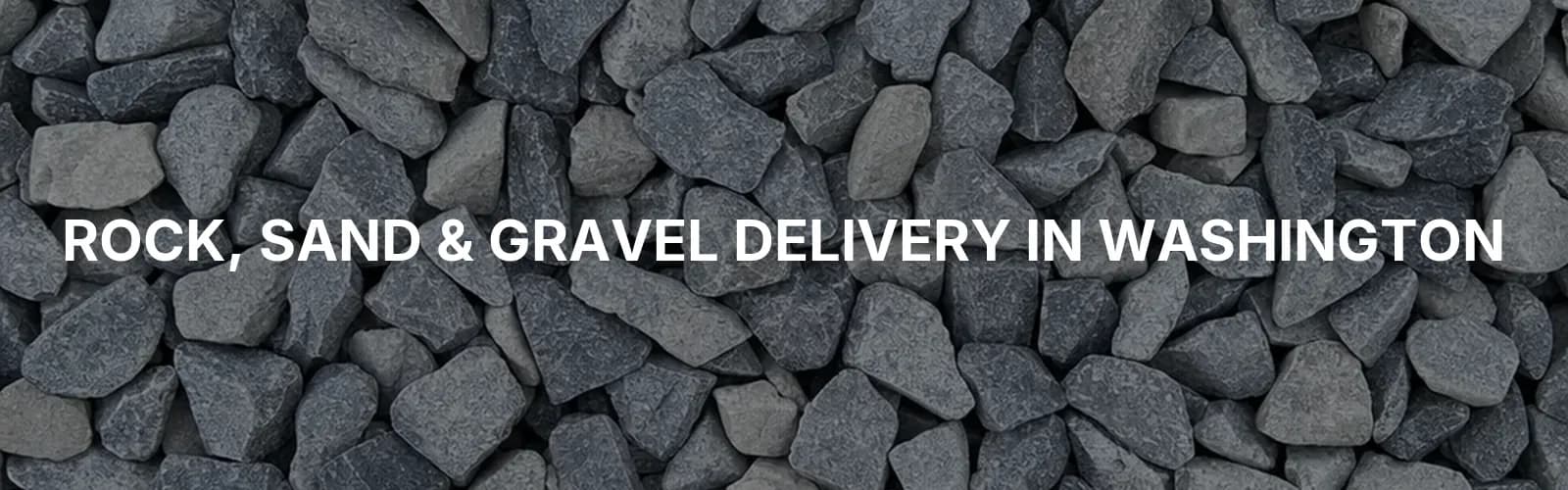
Washington Rock Supply sells gravel, stone and aggregate delivery in Franklin County, WA, ordered online and tipped on site. The material to start with here is 5/8 minus, the crushed surfacing top course that packs hard and sheds water.
Franklin County sits on the Columbia Basin side of the state, where windblown silt lies over basalt and the ground runs dry and loose through a long working season.
Materials delivered in Franklin County
Order by the job you are building. A driveway takes a structural course under a finer top course.
A patio takes a bedding sand or a compacting fines product. A drain takes washed stone with the fines taken out.
5/8 minus is the Washington default surfacing course. It is crushed rock with the fines left in, so it compacts and holds instead of letting water run through.
Use it for driveways, parking pads, and shed or shop slabs.
1 1/4 minus is the base course under that. Section 9-03.9(3) sets the base grading at a 1 1/4 inch top size, shortened to CSBC.
It carries load on soft wet ground because it has a larger top size and fewer fines.
Washed products drain instead of compacting. Drain rock, also called 7/8 clean, has no fines, so it keeps its voids in footing drains, French drains and infiltration trenches.
3/4 clean does the same job in trench backfill, pipe surround and drain fields.
Rounded stone is filed under round rock in Washington yards. Natural Pea Gravel suits play areas and planting beds, and it will not compact, so edge it where it can wander.
River rock and large round rock armour swales, ditch banks and culvert outfalls.
For flatwork and planting, mason sand goes into mortar and stucco, washed sand goes into concrete mixes and setting beds, and beauty bark covers planting beds and tree rings. Garden blend is screened soil and compost for raised beds.
Ground conditions across Franklin County
Across the Columbia Basin, Yakima Valley and the channeled scablands, the ground is windblown loess over Columbia River basalt. Where the Ice Age floods ran, the loess was stripped off and the basalt left bare, and the floods dumped sand and gravel bars in the coulees and along the rivers.
That matters under a drive or a slab. Silt sheds water rather than absorbing it, so an under-built base moves when a cloudburst or a thaw lands on it.
Where flood gravel sits at the surface, water disappears straight down instead.
Rainfall in parts of the basin runs seven to nine inches a year, so the ground stays dry and loose. Wind off bare silt moves soil, and short violent runoff cuts rills and gullies when no cover holds the surface.
Irrigation runoff moves soil too.
The working season is long on either side of a hard winter. Eastern Washington's wet weather season for erosion control runs October 1 through June 30.
Once snow falls or the ground freezes, placing and compacting base material stops being practical.
Winters here are cold and dry and summers hot and dry, and the ground freezes properly, unlike west of the Cascades. Frost heave in an unbound base is something to design for.
Frost depth is set by the county or city building department and runs deeper with elevation.
Delivery across Franklin County
Order online and pick a quantity by the ton or by the yard. Each product page has a calculator, and you choose a delivery date at checkout.
A dump truck then tips the load in one pile on site.
Delivery covers Pasco, Connell, Mesa and Eltopia, along with the surrounding rural addresses. Bulk loads arrive as a single tipped pile, so plan where you want that pile to sit before the truck reaches the property.
Choosing the right material
Benton County, Grant County and Adams County all share the same ground region as Franklin County: windblown loess over Columbia River basalt, with flood-stripped scabland where the Ice Age floods ran and sand and gravel bars in the coulees and along the rivers.
That means the base and drainage choices carry across the same way. Silt that sheds water still needs a structural course under it, and washed stone still belongs where water has to move.
Match the material to the job. Minus products compact and hold, so they suit drives, pads and paths.
Clean and washed products drain, so they suit footing drains, trench backfill and drywells.
Order 5/8 minus and crushed stone for your Franklin County job
5/8 minus is the surfacing course to start with on a Franklin County drive, pad or slab, and 1 1/4 minus goes under it where the ground needs to carry load. Washed stone and sand cover the drainage and flatwork side of the same job.
Order online by the ton or yard, pick a delivery date, and Washington Rock Supply tips the load on site.